Dragon Ball Xenoverse 3 Soul Switch, Soul Assist, and Awoken
Three different systems. One exclusive fork. Do not mix the names in a loadout argument.
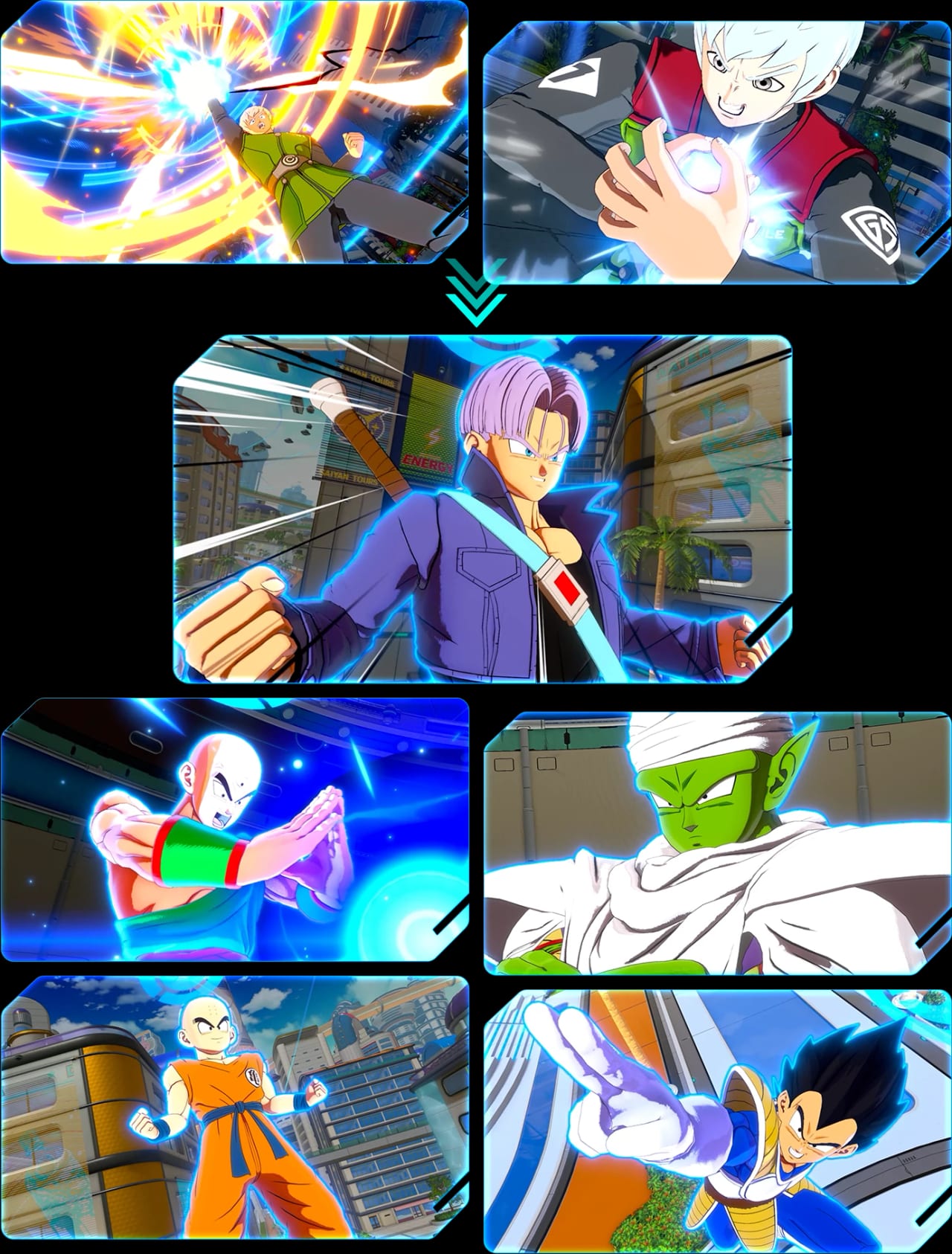
Soul Switch is the headline mechanic in Dragon Ball Xenoverse 3, and it is also the most misnamed. Players use “Soul Change,” “Soul Shift,” and “possess Vegeta” as if they were one button. Officially there are three systems: Soul Assist, Soul Switch, and Awoken Skills. Assist is always available as a gauge. Switch and Awoken share one Potential Meter slot — you equip one, not both. The game is upcoming for 2027; this page sticks to Bandai Namco’s battle-system guide and customization explainer. Button map: Controls. Ki rules: Combat.
Soul Assist — call a friend, keep your body
Hold L2/LT + Square/X when the Assist gauge is full. A franchise character enters the fight with you. Two families:
- Independent summons. Can be called while you are taking damage or already in Ki Break. They act on their own, extend combos, and function as a lifeline. This is the “get me off the floor” Assist.
- Sync assists. Cannot be summoned during hitstun. They hit harder or apply stronger buffs, sometimes as a single-blow finish. This is the “we planned this” Assist.
Up to two charges can store. Cooldown returns one charge at a time. Effects depend on the character. With about 130 characters in the launch pool (including non-fighters), Assist identity is a mentor Skill Tree problem — you unlock the ones you Bond with in West City. See character creation and the roster.
Assist does not replace your Super list. It is a sixth-ish tool next to four Supers and one Ultimate.
Soul Switch — become them
Hold L2/LT + Circle/B when the Potential Meter is maxed and you equipped a soul instead of an Awoken Skill. You temporarily switch into that Super Warrior:
- Appearance changes
- You give up your own Super Attacks and Ultimate
- You gain their signature techniques
- Not locked to your avatar race
- One soul equipped at a time
Trailer and article examples: Krillin, Piccolo, Vegeta, Future Trunks, Tien. Gamescom comments tie the idea to Toriyama-created in-world technology and to the theme of connection. Gameplay implication: Soul Switch is a burst stance. You press it when you want a known character’s kit, not when you want to stack Saiyan hair forever.
On activation you fully heal, Super cooldowns speed up, stats jump, and you get character-specific extras. Cooldown and exact duration numbers are not published. Do not copy a spreadsheet that invents “14.5 seconds.”
Pre-launch preference ranking: Soul Switch tier list. That list is opinion based on kit fantasy (Vegeta pressure versus Krillin support), not win rates.
Awoken Skill — stay yourself, spend Ki
If you equipped Awoken instead of a soul, the same Potential Meter shortcut awakens your race form. Official points:
- No hard timer after demo feedback (Gamescom 2026 / Hirano)
- Tied to the Ki Gauge — stay transformed while Ki remains
- Ki Break or Ki = 0 returns you to base
- First activation fully heals
- When the gauge refills you can awaken again into a higher level and heal again
- You do not receive a new Super list; you keep your CaC attacks with a unique benefit
Saiyan footage shows Super Saiyan 3 as a reachable form in a hands-off demo. Android, Namekian, Frieza Race, Majin, and Earthling each get their own awaken path because “every race can awaken.” We will not invent Super Namekian ki costs. Track race value on the race tier list and races page.
Ki Charge exists partly so Awoken players can refill Ki and the awaken gauge instead of dropping out mid-Broly.
Which one should you main before launch?
Use this fork, not a YouTube thumbnail:
- Want to be Goku-coded as a Saiyan for a whole mission? Awoken. Learn Perfect Guard so you never Ki Break yourself out of Super Saiyan.
- Want to play Piccolo’s kit on an Android body? Soul Switch. Your race awaken is gone; your Assist still works.
- Want a panic button while you learn How to Play? Prioritize an independent Soul Assist regardless of the fork.
- Want squad utility? Sync Assist plus a Ki Drain Super is more valuable than a flashy Switch you press too late.
You can change the fork in customization; this is not a forever alignment. It is a per-loadout exclusive, so your PvE preset and your showcase preset might differ.
Mentors are the unlock gate
You do not start with 130 souls. MistyPix → Fortuneteller Gal → mentor in West City → Bond → Skill Tree node. If Soul Switch “is locked” in a demo, the booth preset chose Awoken or a different soul. Hub loop: West City.
Naming collisions to ignore
- Soul Change / Soul Shift: press language from early previews. Official combat article uses Soul Switch.
- Soul Change as Awoken: wrong. Awoken is the race form.
- Assist = Switch: wrong. Assist keeps your body.
When patch notes eventually list soul durations, this page will gain a table. Until the 2027 launch, practice the decision, not fake numbers. Next reading: Combat if you still mash Ultimate on full-Ki bosses, or fighting styles if you care more about how the Switch character walks than how they burst.
Frequently Asked Questions
Quick answers to the most common questions.
Is Soul Switch the same as Super Saiyan in Dragon Ball Xenoverse 3?
No. Super Saiyan is a Saiyan Awoken Skill. Soul Switch turns you into another character's soul and replaces your Super/Ultimate kit. You cannot equip both.
Can Soul Assist be used during Ki Break?
Only the independent Assist family can be summoned while you are taking damage or in Ki Break. Sync assists cannot. Check which type you unlocked from the mentor tree.
Does Soul Switch work on every race?
Yes. Official notes say it is not tied to your avatar race. You still equip only one soul at a time.
Where do I unlock more souls?
Bond with mentors after collecting MistyPix in West City. Skill Trees grant Soul Switch, Soul Assist, and attacks. See character creation.